The story
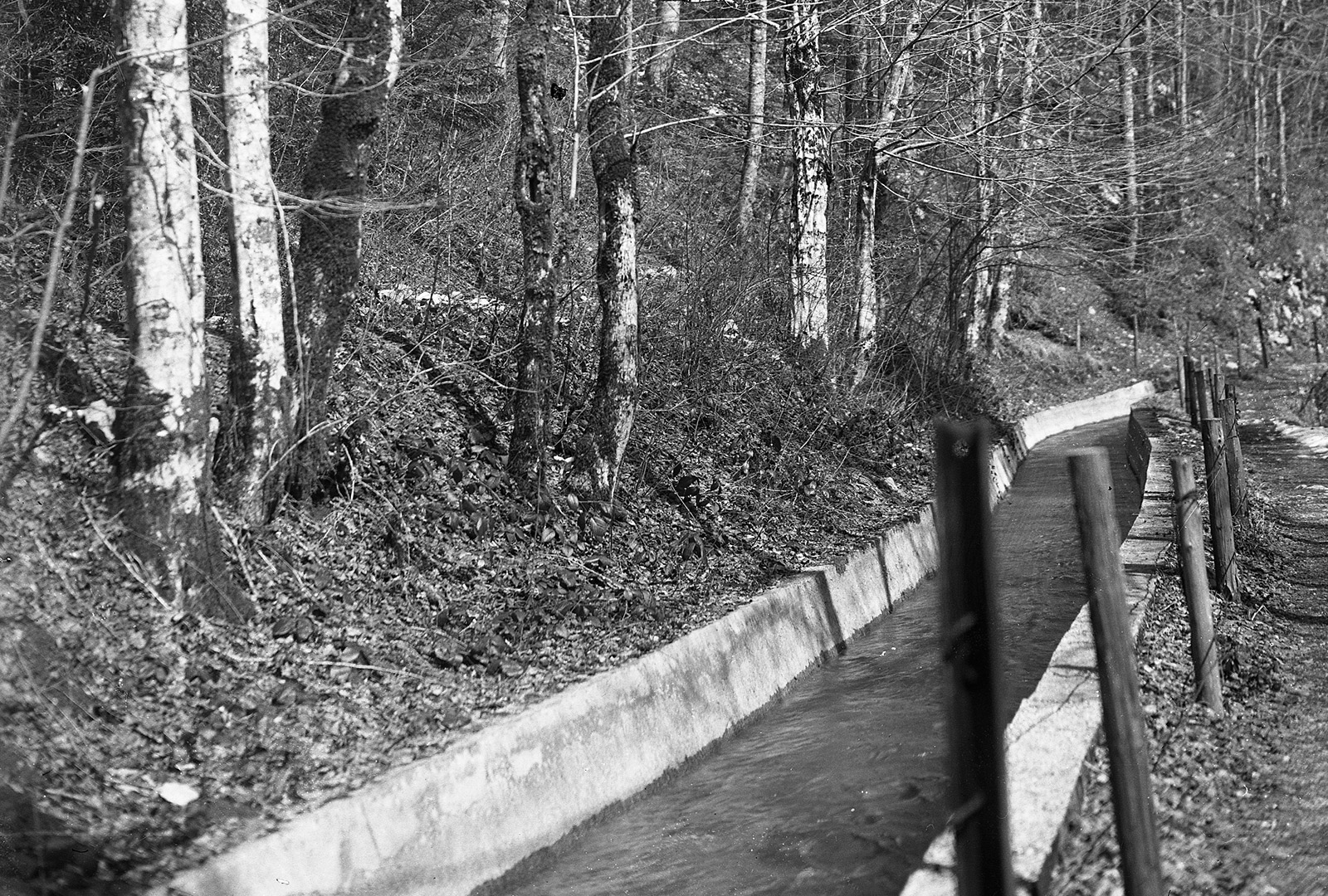
THE BEST OF YOUTH, PASOLINI TRAIL IN IDRIJAThe construction of the rake (water channel) was an important part of the reconstruction and modernization of the mine at the end of the 16th century. According to the plan of the mine manager Georg Adler, the Idrijca river was dammed above the Wild Lake near Kobila and a strong water current was channelled through a 3639 m long wooden trough – the rake. These supplied water to large wooden wheels (kamšti) for a good 350 years. The water flow drove numerous mine lifting and pumping devices, saws, and large forging hammers. Water from the rake was used to extinguish the catastrophic underground fires in 1803 and 1846, and after 1909 part of the water was diverted to the mine’s power plant in Lenštat, which is still in operation today.¹
In the past, miners from Podgora, Cegovnica, Kovačev Rovt, and Gore walked along the rake, and the walking path alongside it has always been attractive to scientists and everyday visitors due to its botanical, geological, and other biotic peculiarities. We assume that the young Pasolini also played/walked along it, as his family lived in the immediate vicinity (point 7) and in later years he wrote some poems collected under the title Via degli amori.
¹ Source: Ob rakah: po poti idrijskih naravoslovcev
We are just a few steps away from the last point of the Pasolini itinerary – the building where the Pasolini family lived. Point 7.— »Invitation«
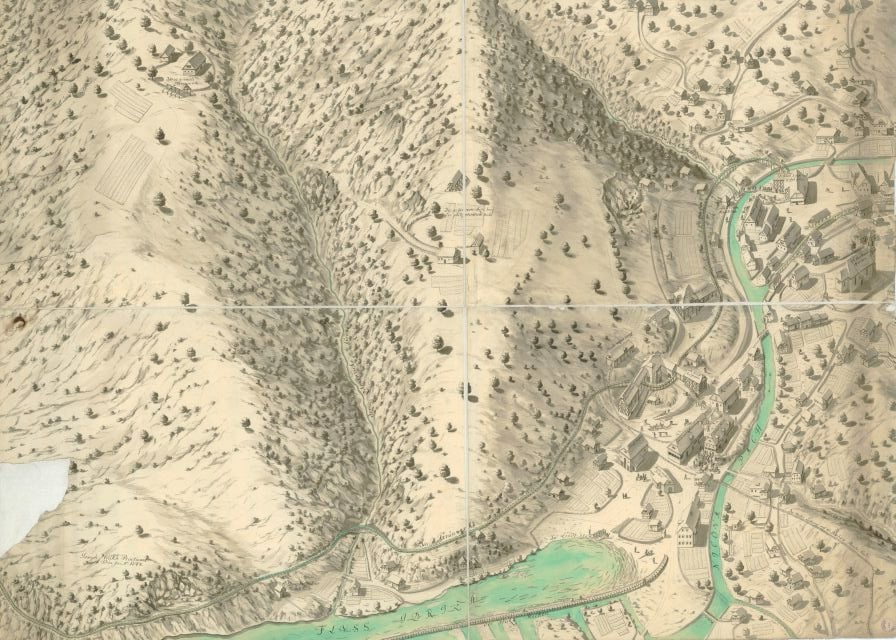
Risba rak Jožefa Mraka iz leta 1744 (Avstrijski državni arhiv, Dunaj, Arhiv dvorne komore, zbirka kart, Pc 4. Sken hrani ZAL Enota v Idriji)
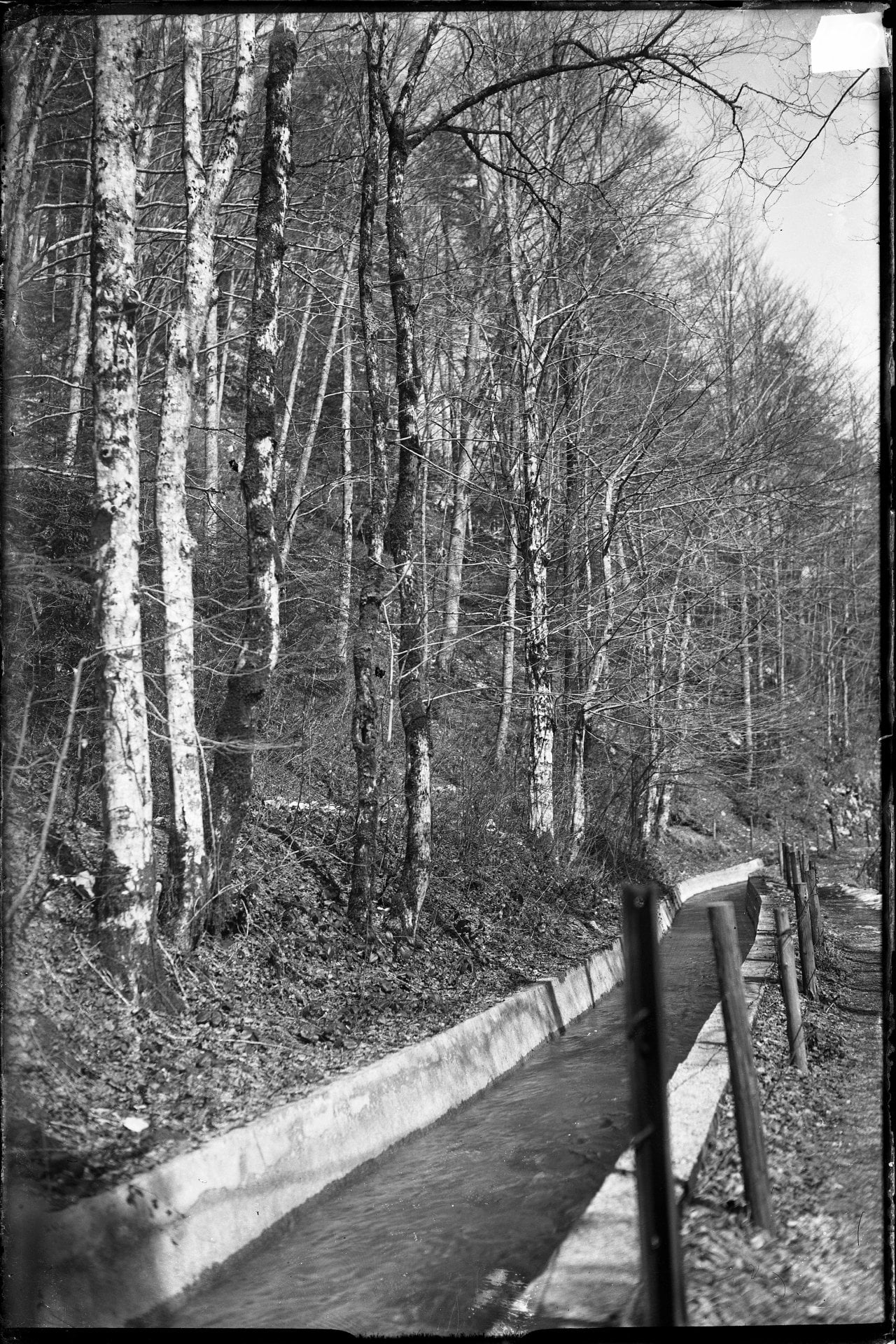
The path along the Rake canal, during the Italian occupation. Source: photo archive of the Idrija Municipal Museum.


