
Pier Paolo Pasolini Study Center
The story
CASA COLUSSI – STUDY CENTRE, CASARSA PLACE OF THE SOUL
Facade of the Pier Paolo Pasolini Study Center in Casarsa
The foundations of Casa Colussi are rooted in a past that predates Pier Paolo’s birth, and it is with the family’s settlement that the building begins to shape the most significant part of its history: Domenico Colussi, the poet’s maternal grandfather, commissioned its construction at the dawn of the twentieth century, in a gesture of affection aimed at welcoming his Piedmontese wife, Giulia Zacco.

Historic stone coat of arms of the Colussi family "CO IA DE COLVS".
The internal path begins in a room whose Friulian name means “In the heart of a child”. Here the door opens onto Pasolini’s most intimate and pure universe. After his early years marked by constant moves due to his military father’s work, Pier Paolo found right in Casarsa a recognizable elsewhere and a true identity.
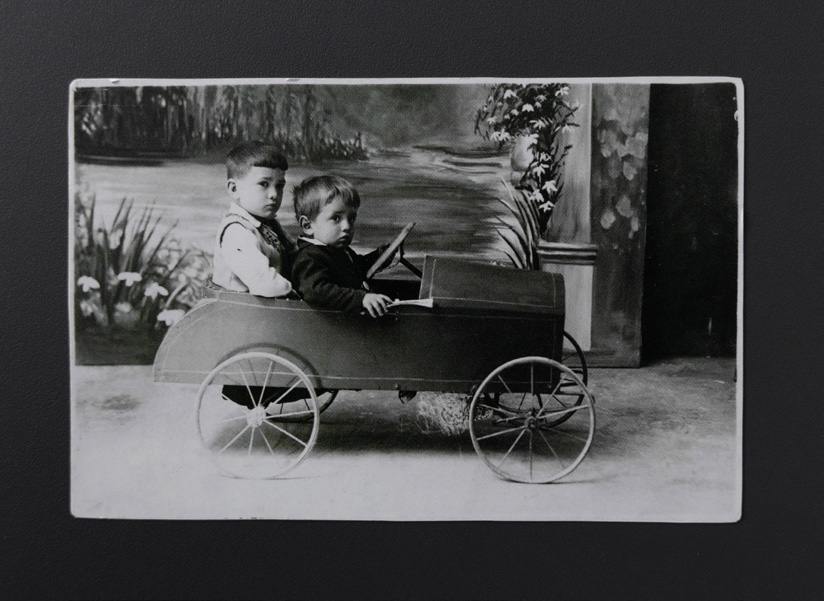
Pier Paolo and his younger brother Guido, inseparable childhood companions.
The documents and vintage photos recount the years of carefreeness, of games in the shade of the mulberry trees, and of that rural idyll in which blossomed his first, precocious need to tell the story of the world and the imagery that would accompany him forever.
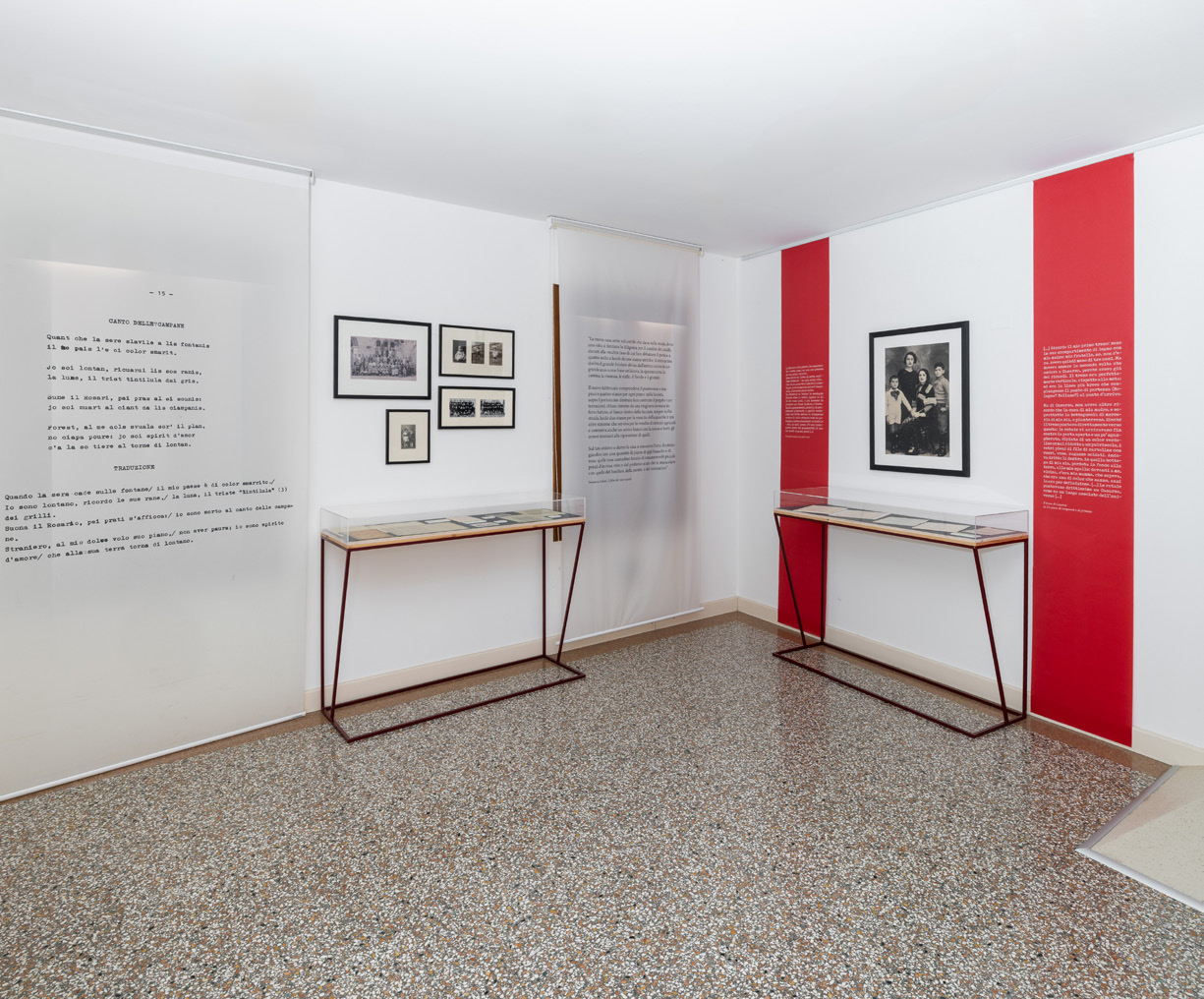
Childhood memories on display in the new layout.
The second room presents itself as a true alchemical laboratory of artistic creation. It is in this space that Pasolini’s first literary spark takes shape and intensity, evolving from his early unpolished exercises to more mature drafts.
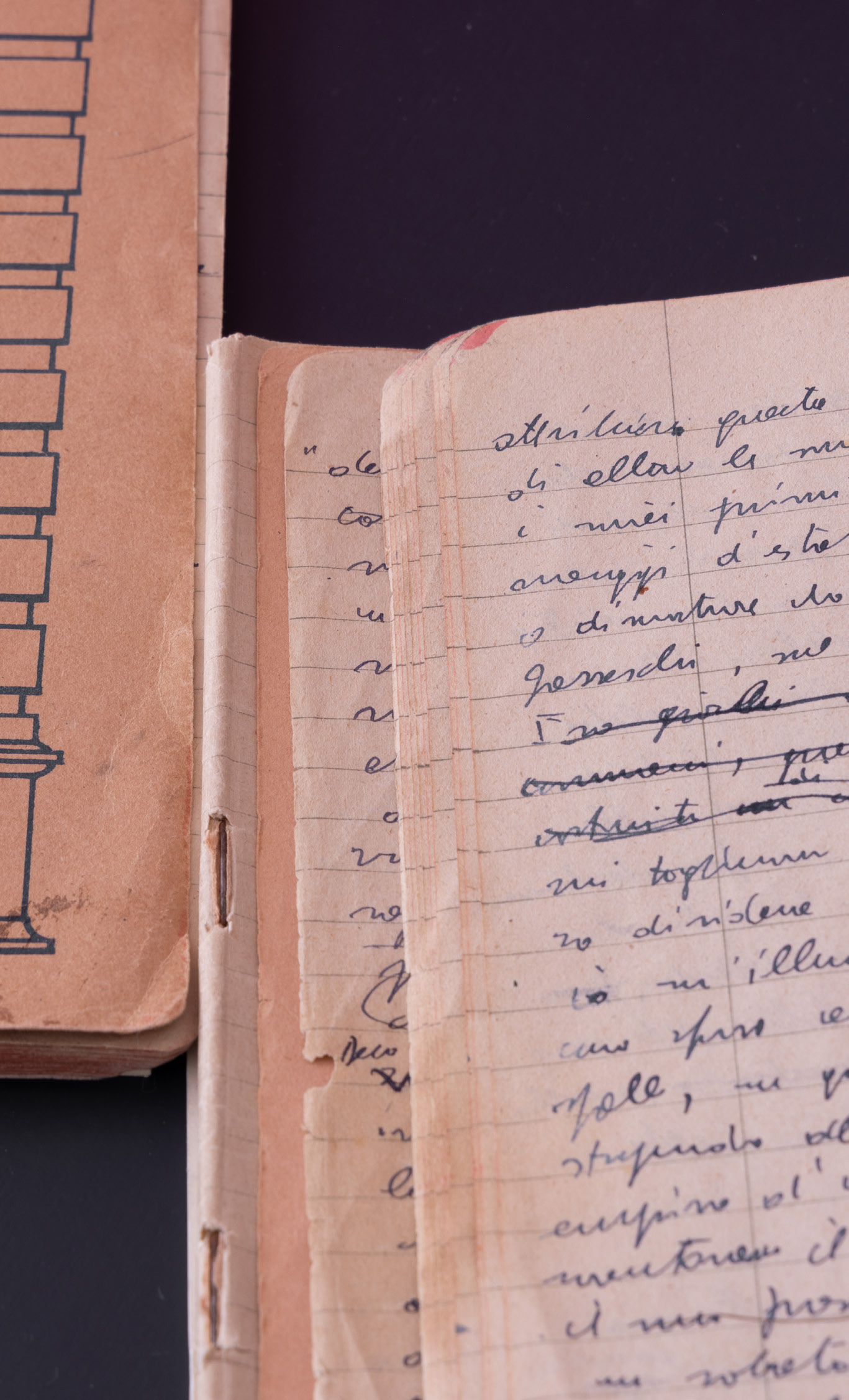
The precious original manuscripts testifying to the young poet's creative fervor.
The room celebrates the author’s official debut. The genesis of “Poesie a Casarsa” (1942) stands out, the work with which Pasolini decided to elevate Friulian, the peasant language spoken by his mother, to the absolute language of poetry, performing an audacious act of literary rebellion.
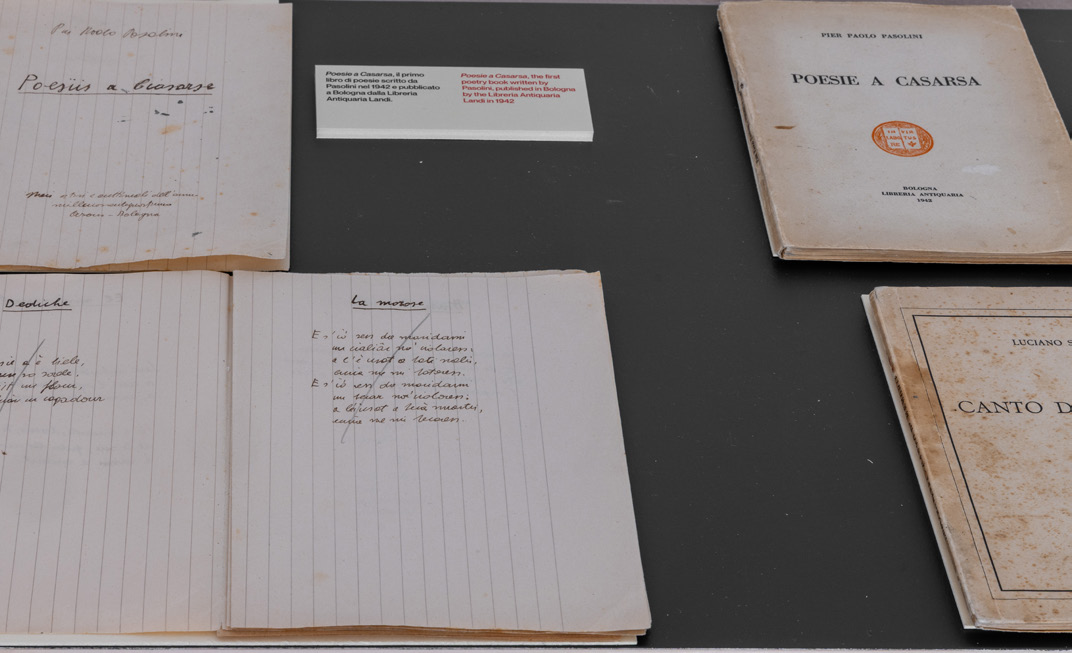
The historic first edition of the poetic debut in the Friulian language.
In this space, the dualism between teaching and the stage is explored. The first section pays tribute to Pasolini’s strong educational calling, documenting the Versuta experience, where he and his mother founded a free school for children who had been denied an education by the war.
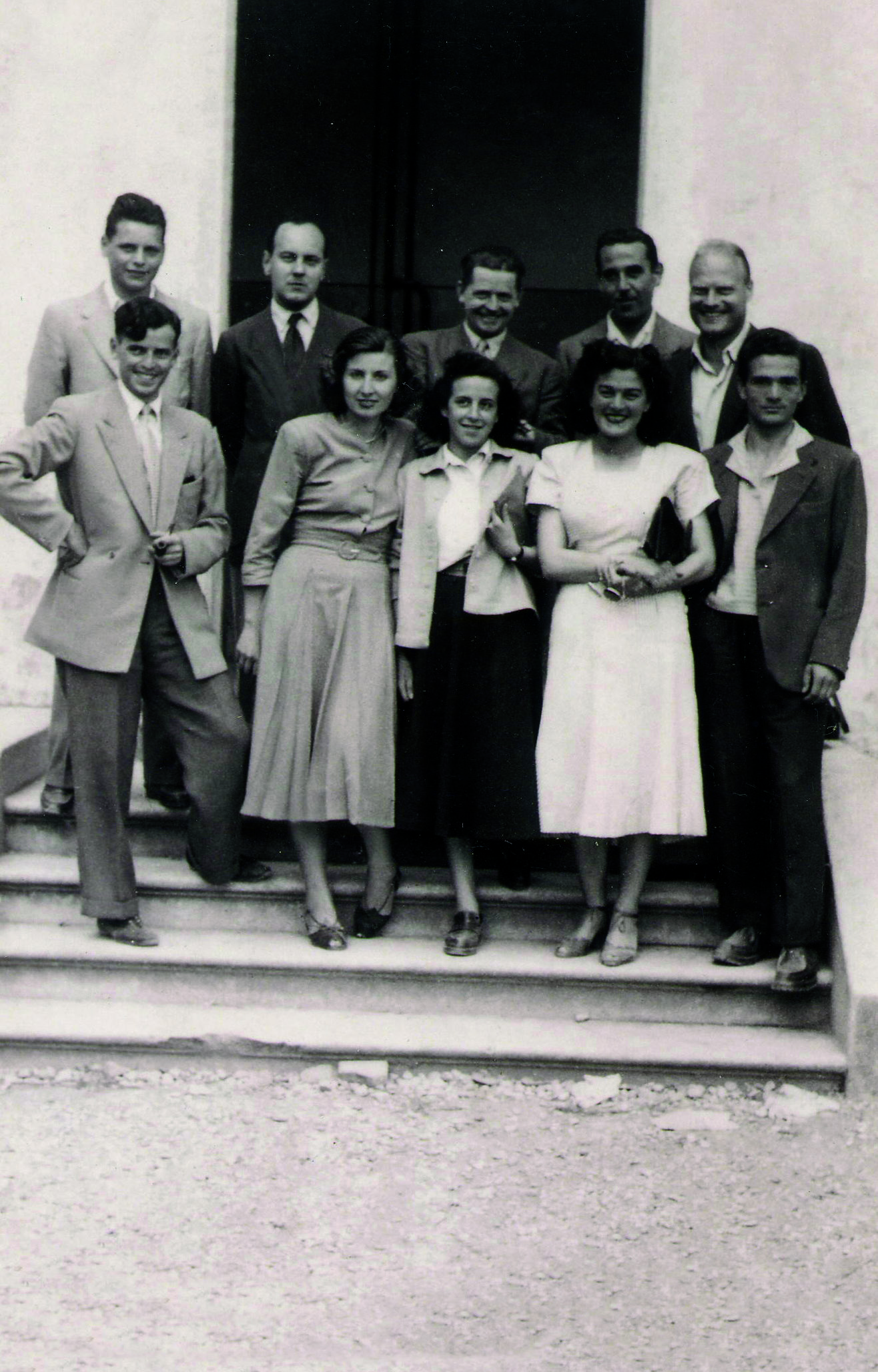
Pasolini (center) as a schoolteacher, surrounded by his students.
Turning to the opposite wall, one enters the world of Pasolinian theater. It is here that the intimate word becomes gesture and civic action, as evidenced by the early drama “I Turcs tal Friúl” (1944), where art becomes an urgency and a response to the events of war.
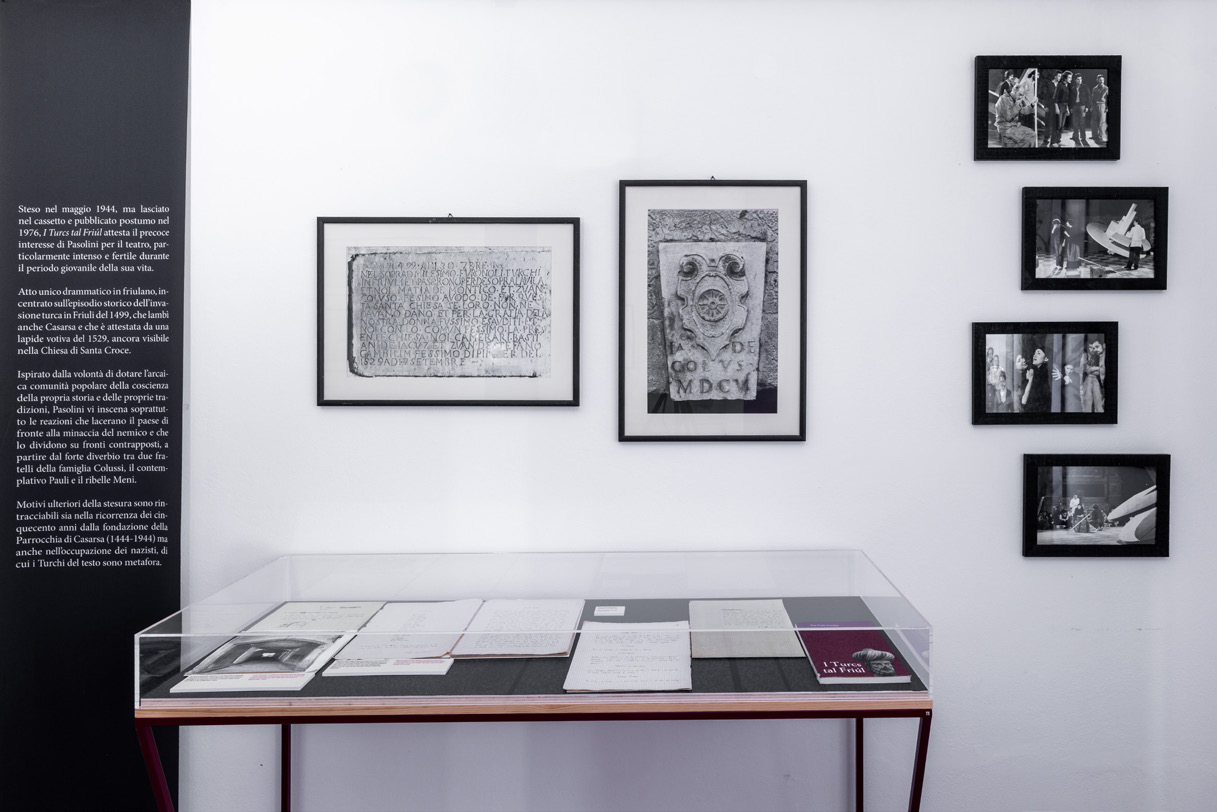
Archival materials dedicated to early dramaturgical experiments.
Going up to the first floor, the visitor encounters a more mature Pasolini. This space illustrates the acquisition of a firm civic conscience, initially born within the ranks of Friulian autonomism in defense of the territory’s historical and linguistic dignity.
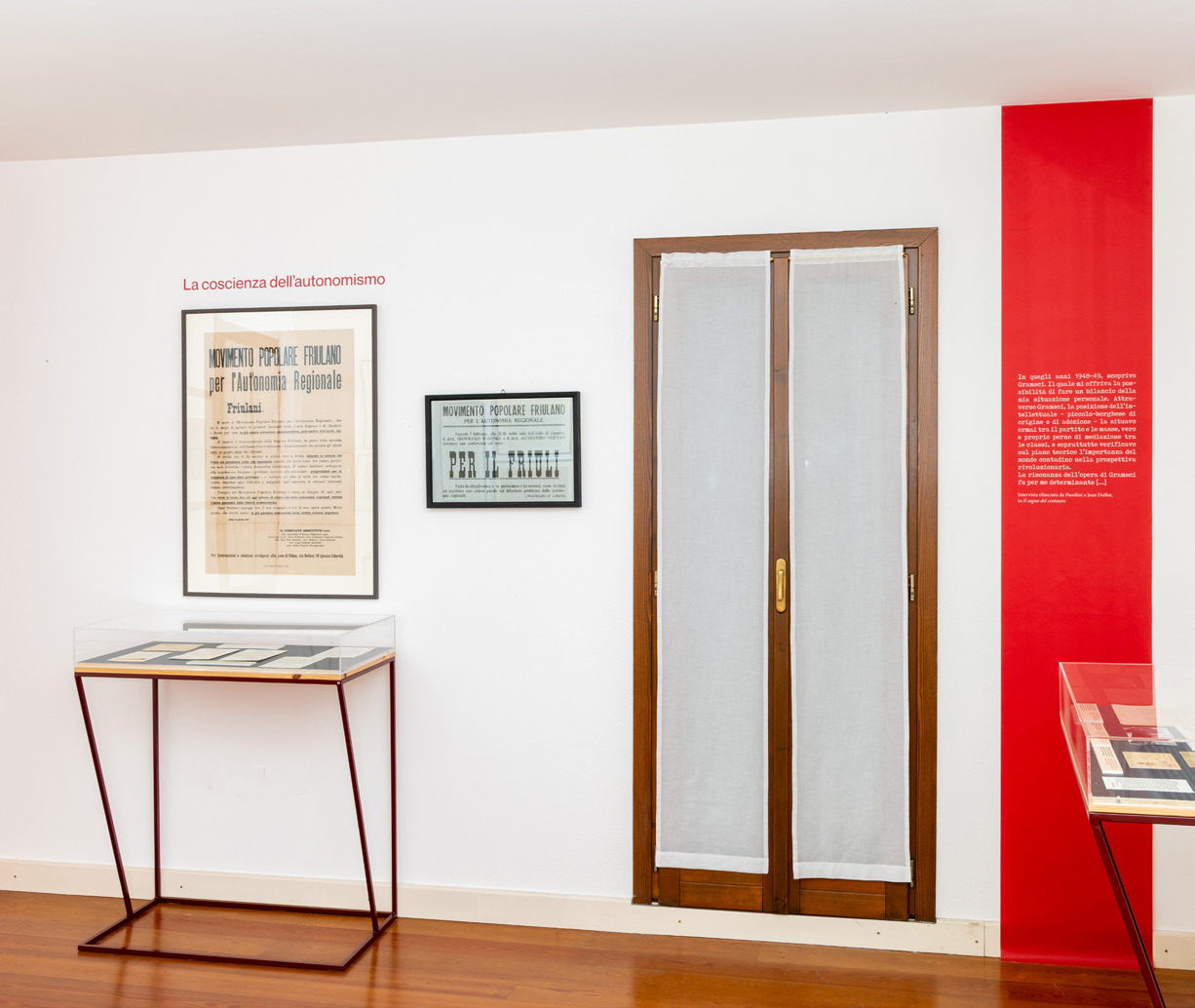
The appeals for the autonomist cause posted in his youth.
His commitment subsequently became more radical with his membership in the Italian Communist Party. As secretary of the San Giovanni di Casarsa section, Pasolini honed his critical gaze against social injustices, defining the figure of the active intellectual that would characterize his entire life.
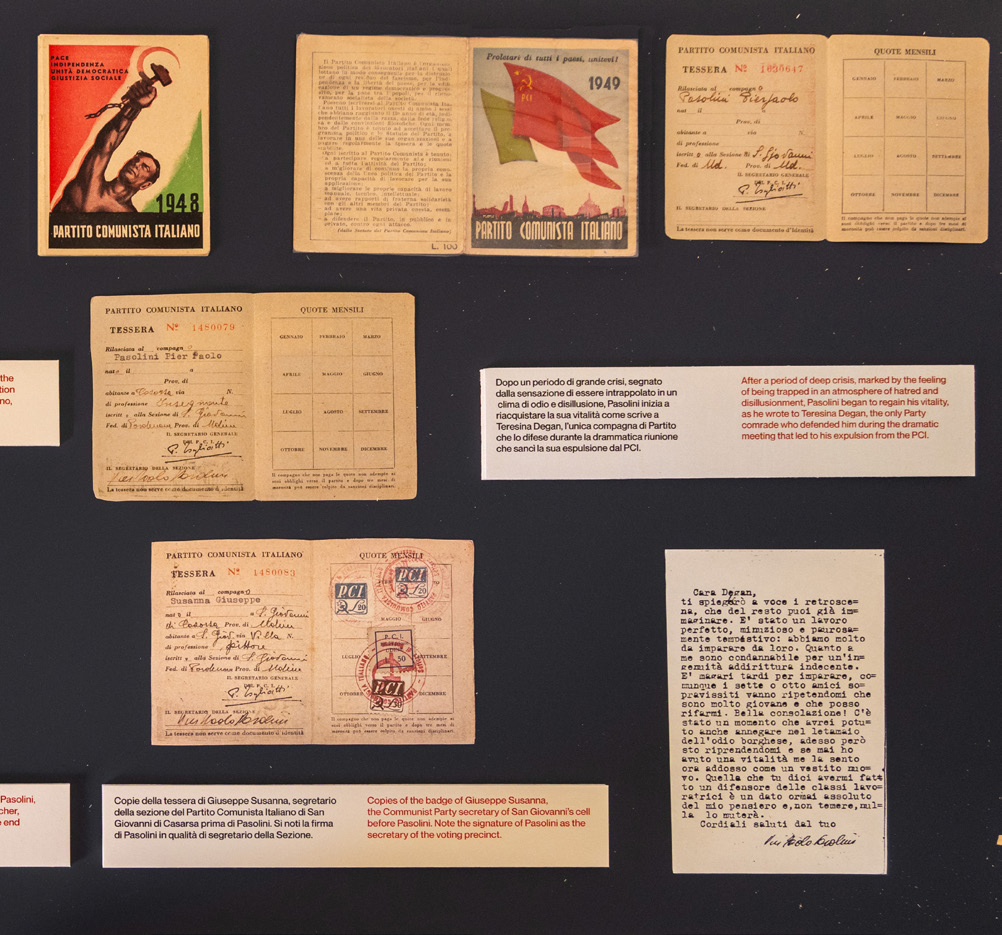
Period documents witnessing the fervent political activism.
Continuing along the corridor, one is immersed in a less explored facet of the artist: painting. For Pasolini, the easel and colors were a vital medium, capable of capturing the soul of things and expressing deep turmoil without needing to utter a single word.
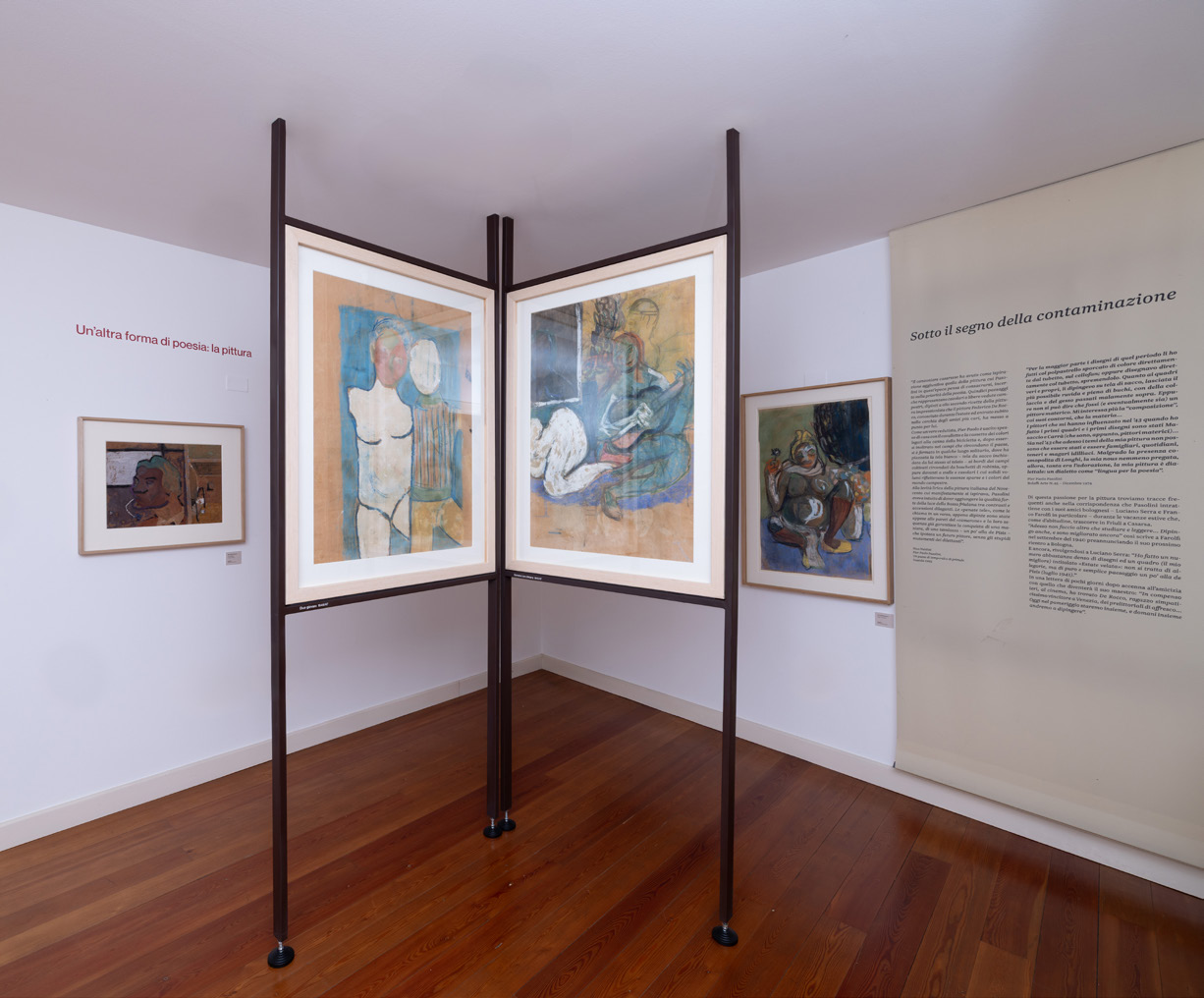
The exhibition display dedicated to Pasolini’s prolific painting activity.
Cultivated from a very early age, his passion for drawing accompanied his intellectual evolution, influenced by his art history studies with Roberto Longhi and his solid friendships with Friulian painters like Giuseppe Zigaina.
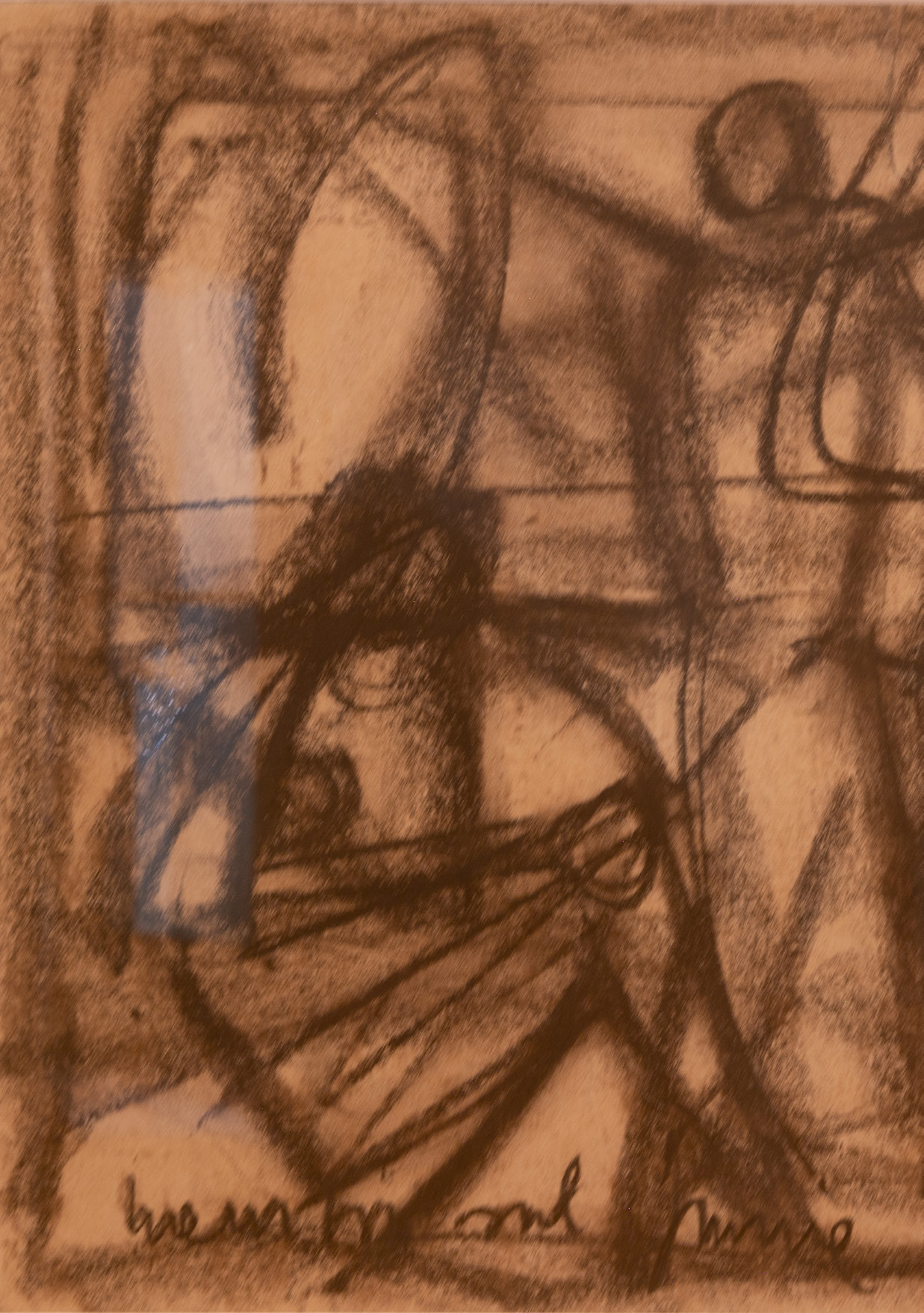
Chromatic sensitivity and a restless stroke: the paintings of Pier Paolo.
Probably the emotional heart of the house, this room is the refuge where thoughts physically became writing. In the center stands a historic typewriter resting on the desk and the iconic chest, once a treasure trove of endless drafts and youthful manuscripts.
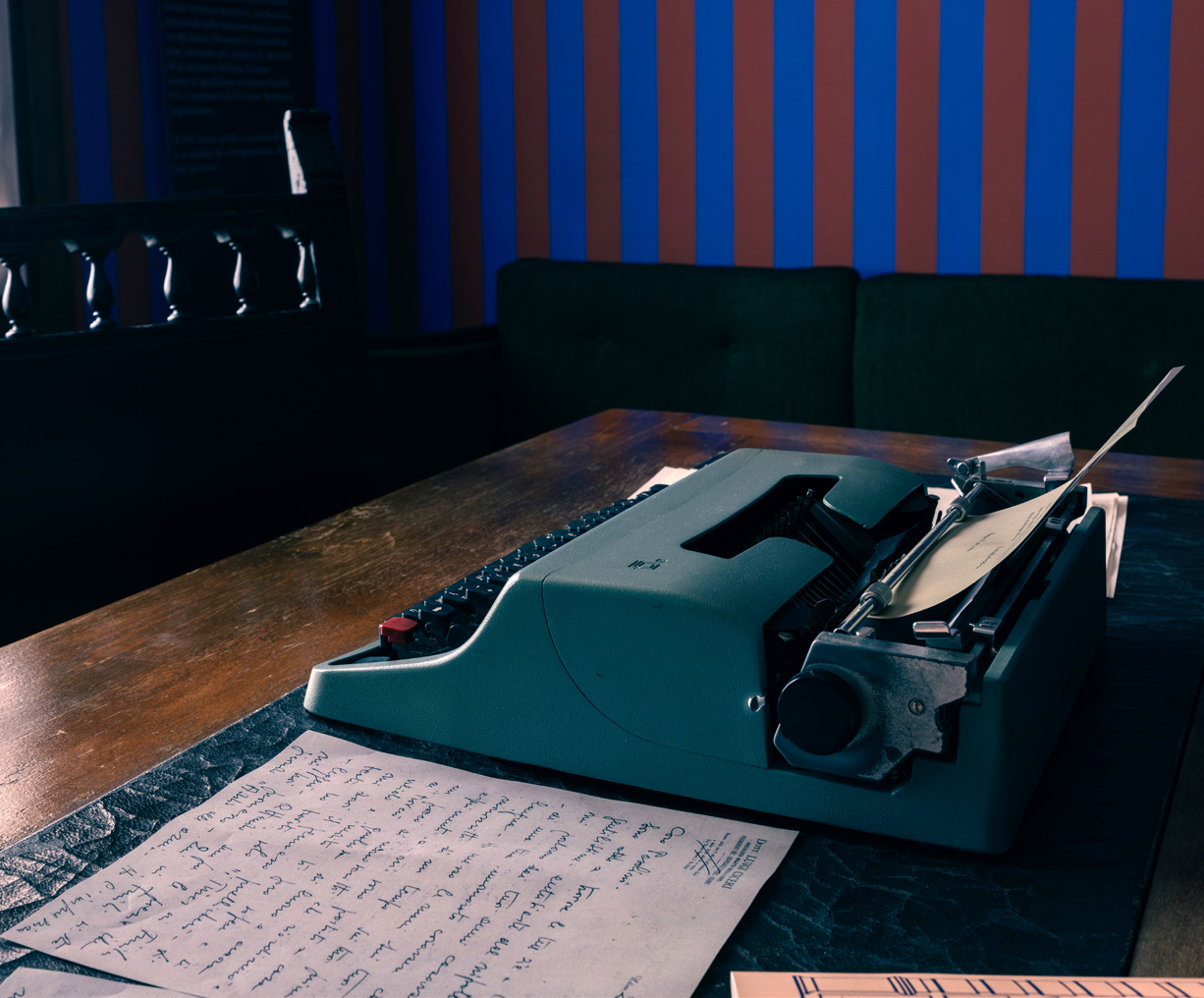
The famous "small table" of Casarsa, the testing ground of inexhaustible writing.
The entire room surprises with an unexpected detail: the walls are decorated with bright red and blue vertical stripes. It is an affectionate tribute to his boundless passion for the Bologna football team and the game of football, considered by Pasolini as “the last sacred representation of our time”.
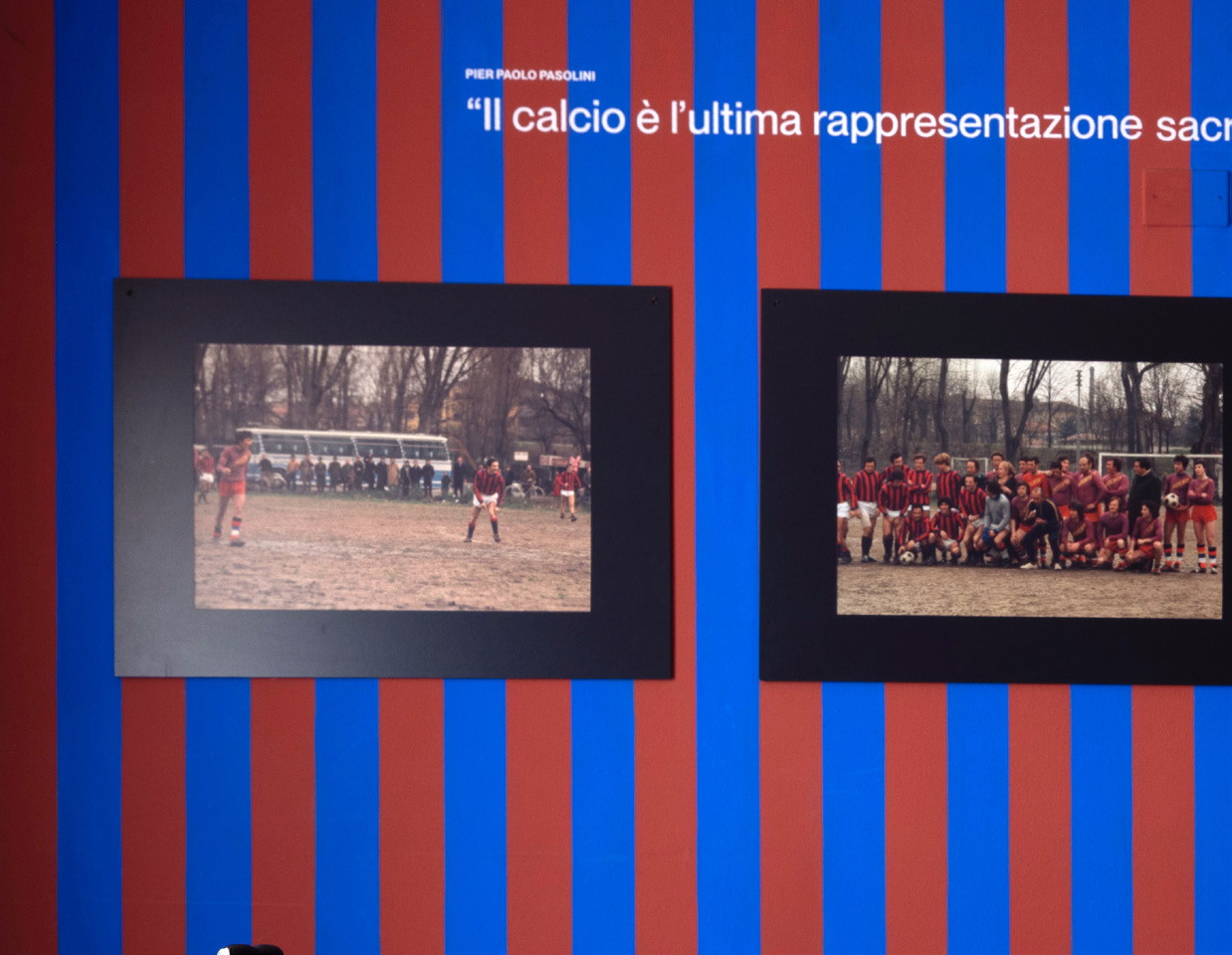
The visceral love for football, a collective and popular ritual.
Like a small secular temple, the last room on the floor reveals the poet’s deepest emotional roots. The space, intimate and with a typical domestic feel, is furnished with antique sideboards and dark wooden seating that belonged to his maternal family.
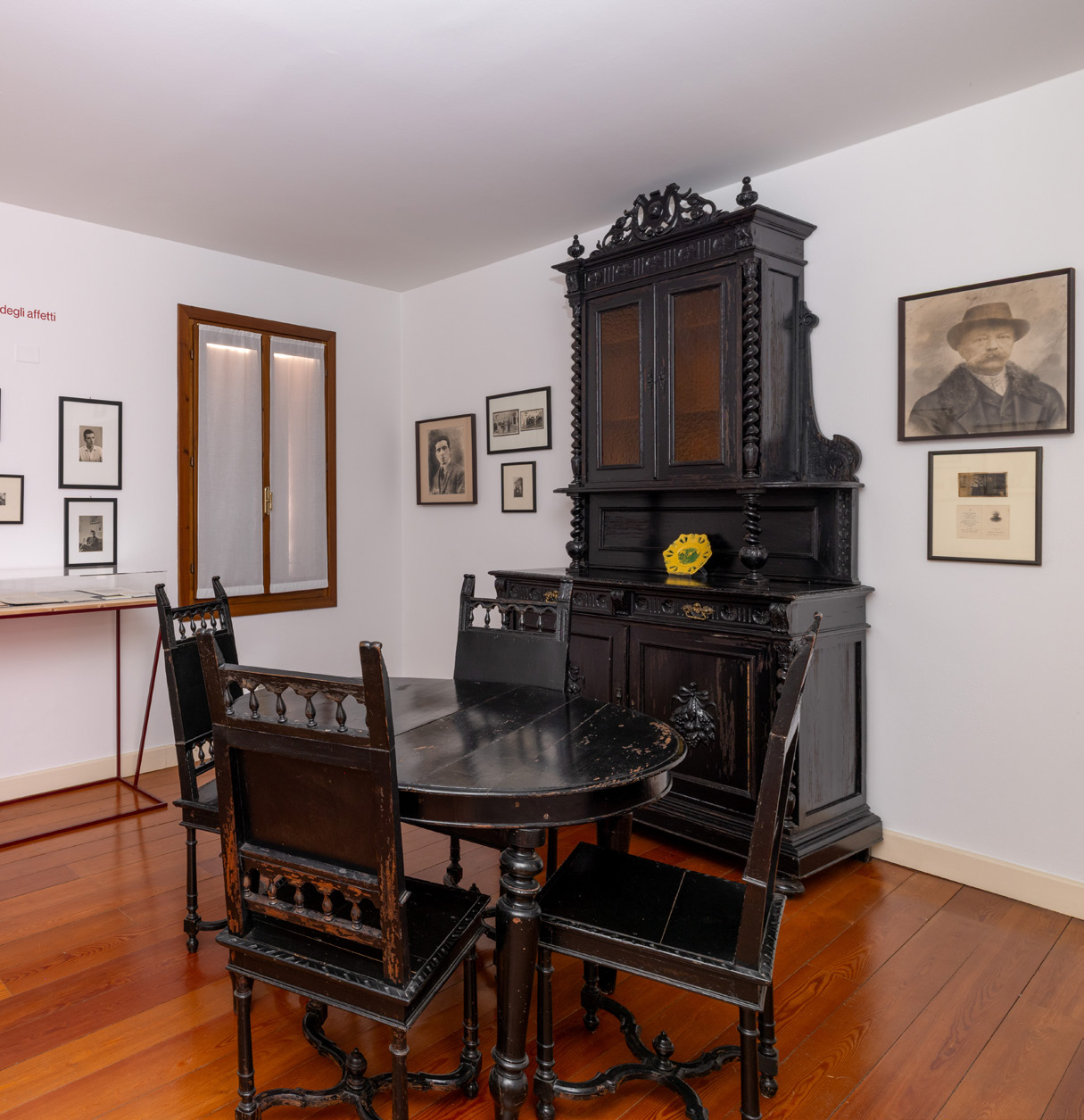
The domestic warmth amidst the family’s original furniture.
Through walls filled with framed photographs and letters, the room documents the feelings that sustained Pasolini through the storms of life. It celebrates his visceral bond with his mother Susanna, the agonizing mourning for the loss of his brother Guido (killed in Porzûs), and the warmth of the fundamental friendships forged in his youth.
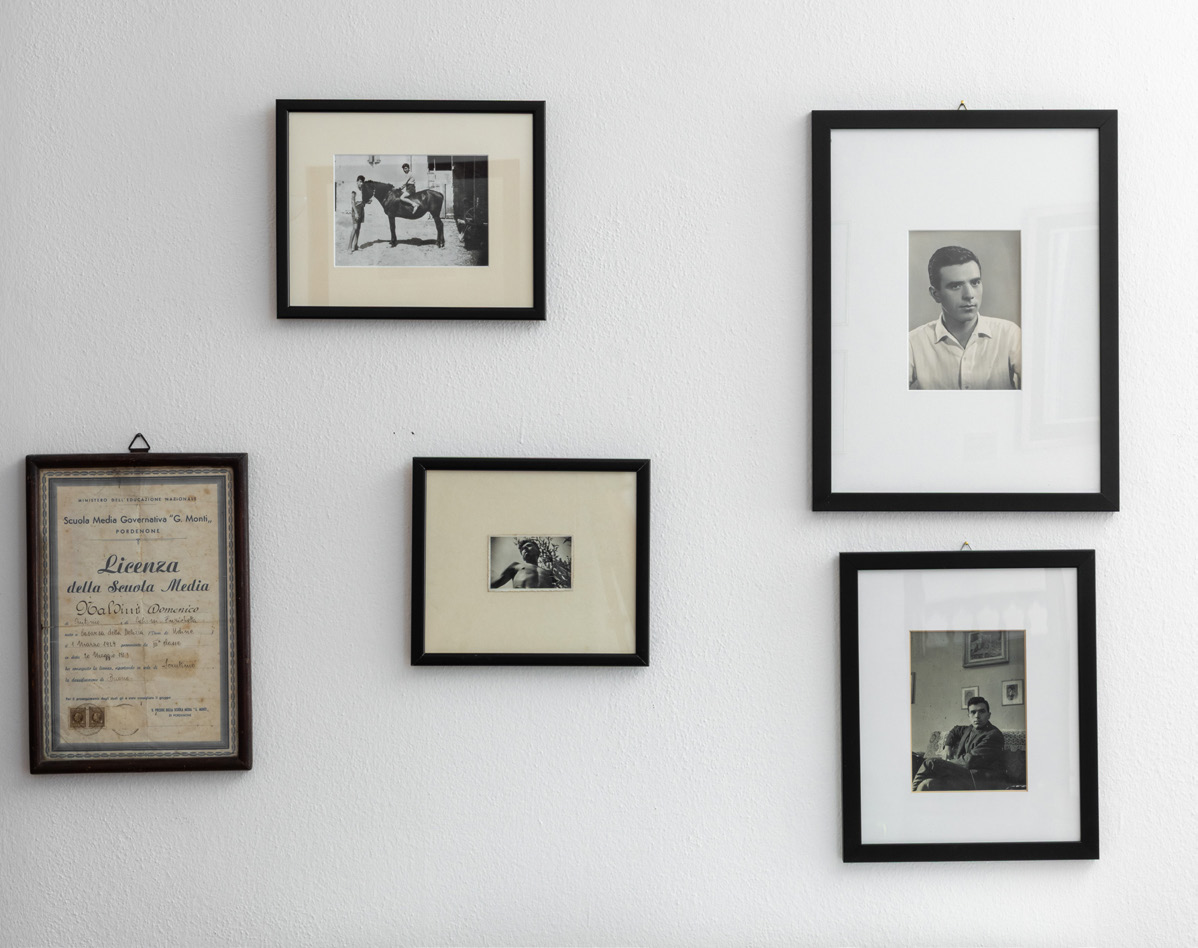
Faces of family and friends embedded in the memory of the house.
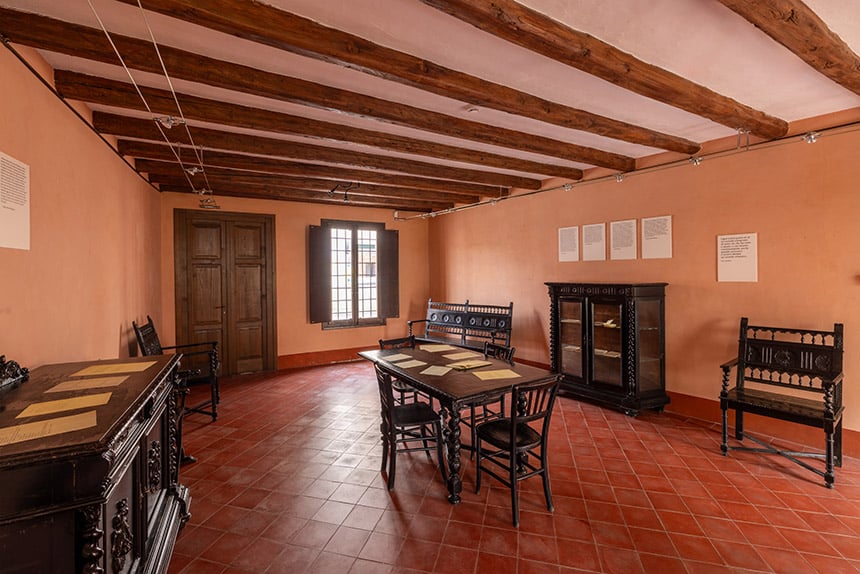
La sala dell'Academiuta di lenga furlana.

La sala dell'Academiuta di lenga furlana.
The Academiuta represents a symbolic place of cultural and linguistic rebirth in the heart of Friuli, as well as the most iconic place of Casa Colussi. Born during the difficult period of the war, this space welcomed the youth of the area, offering them an environment for human and literary growth under the guidance of Pier Paolo Pasolini.
Here the universe of his affections unfolds, nourished by the feelings that sustained and accompanied him throughout his existence, and which gives meaning and rootedness to his soul, often restless and sometimes at odds with the world.

The rustic hearth with the emblem of the Academiuta painted on the hood.
Reaching the top level of the building, the spacious and welcoming attic space evocatively blends the solidity of architectural history with the dynamism of contemporary languages. Under the reassuring warmth of the wooden beams, temporary exhibitions and innovative narrative paths are hosted.

The entrance to the exhibition attic.
The heart of this floor is an immersive room designed to deeply engage visitors, especially the younger ones. Through an experience that combines projections, sounds, and words, the space recreates the vivid sensation of directly encountering the voice and critical genius of Pasolini, making it resonate in our present.
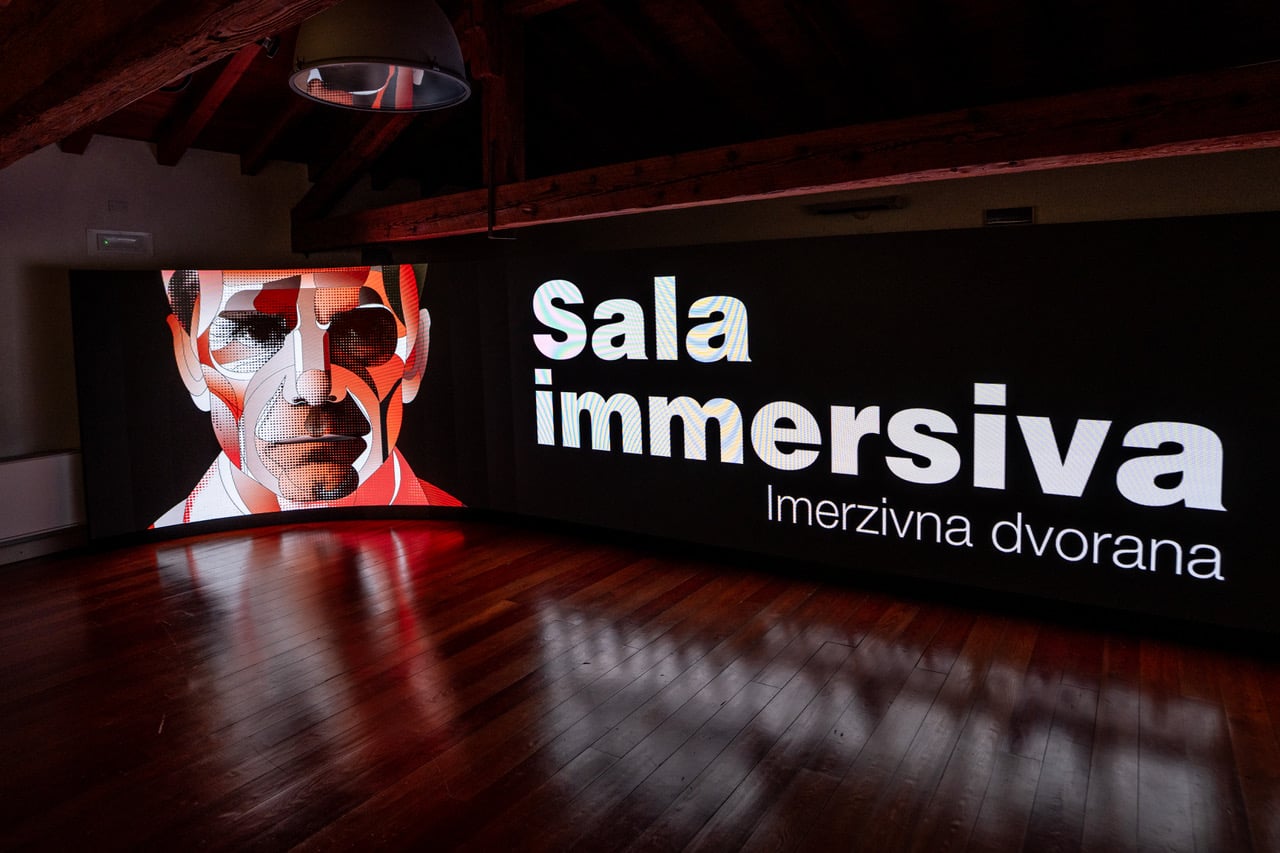
The Immersive Room of the Pier Paolo Pasolini Study Centre.


